
Preventive Maintenance vs Predictive Maintenance
Compare preventive and predictive maintenance, understand their costs and benefits, and learn how to choose the right strategy for industrial equipment.
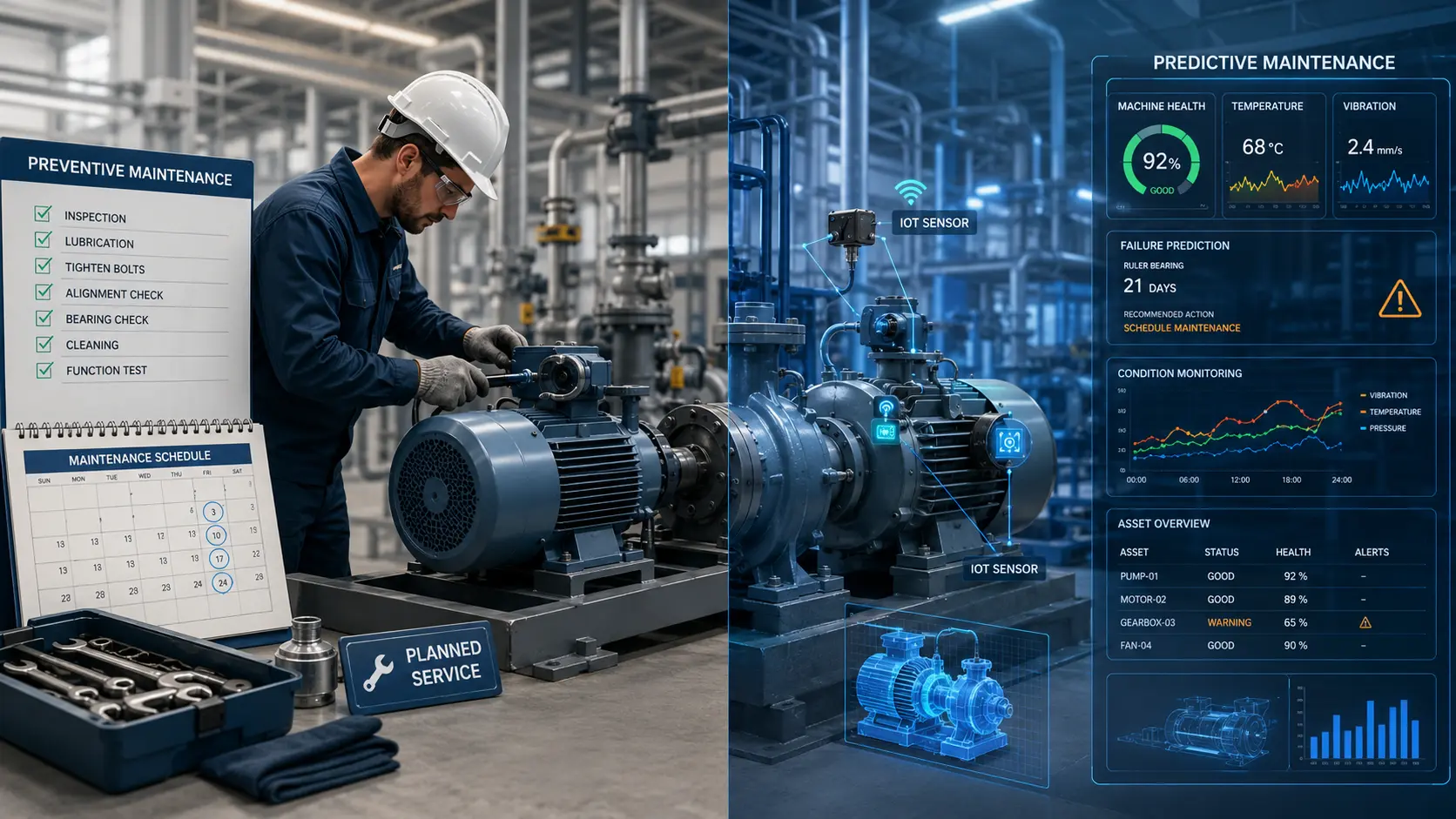
Industrial equipment rarely fails without warning. The challenge is deciding how to identify and address those warnings before they become costly breakdowns. Two of the most widely used approaches are preventive maintenance and predictive maintenance.
Both strategies aim to improve reliability, reduce unplanned downtime, and extend equipment life. However, they differ in how maintenance is scheduled, what data they require, and how precisely they target developing faults.
What is preventive maintenance?
Preventive maintenance is performed at planned intervals based on time, operating hours, production cycles, or manufacturer recommendations. The objective is to service or replace components before an expected failure occurs.
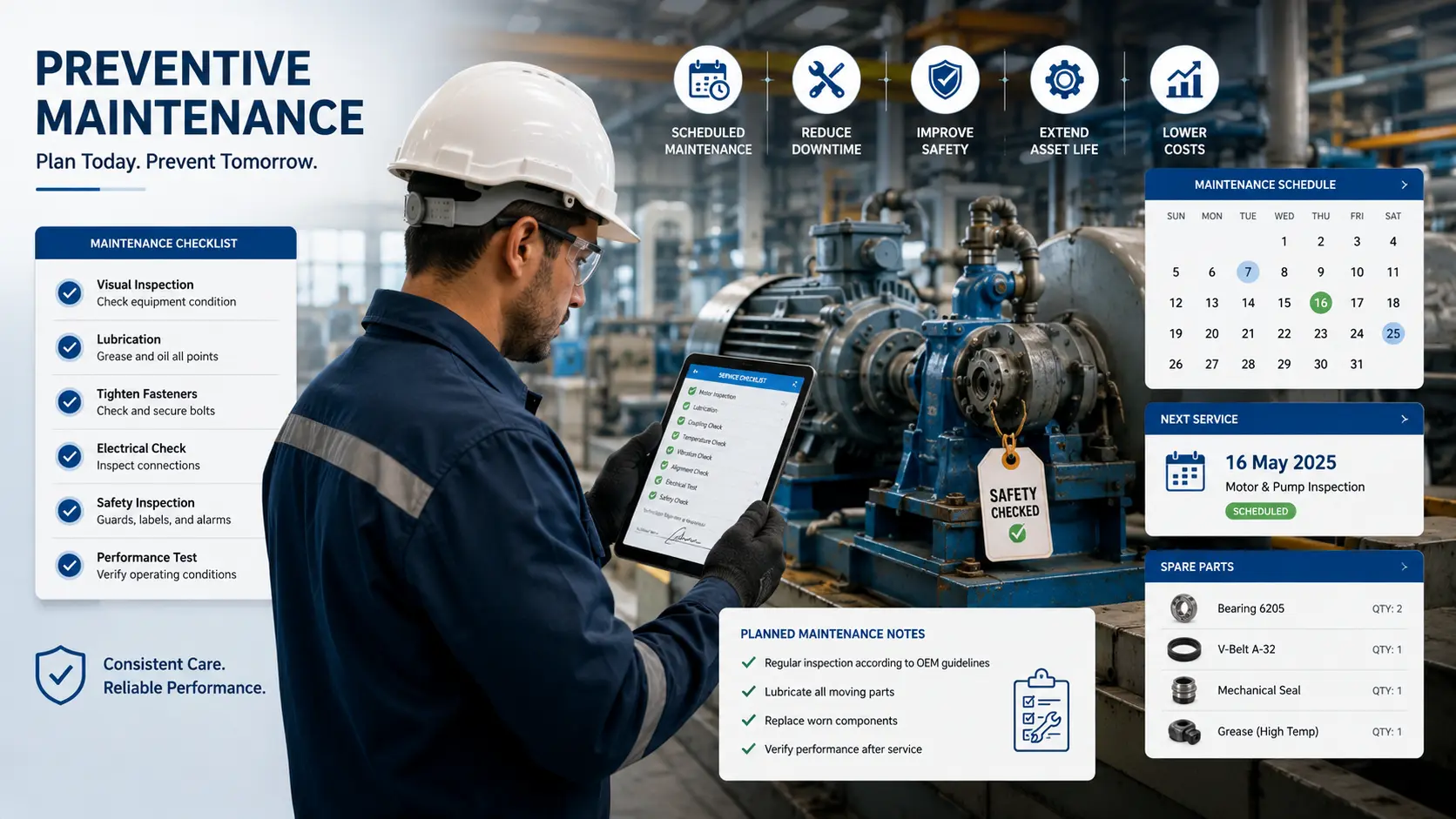
Typical preventive maintenance activities include:
- Scheduled inspections and safety checks
- Lubrication of bearings, gears, and moving components
- Replacement of filters, belts, seals, and other wear parts
- Calibration and tightening of mechanical or electrical components
- Cleaning and planned equipment servicing
Advantages of preventive maintenance
- Easy to plan and understand
- Reduces the likelihood of sudden equipment failure
- Supports regulatory, safety, and warranty requirements
- Works well when failure patterns are predictable
- Requires less advanced technology than predictive maintenance
Limitations of preventive maintenance
Because work is triggered by a schedule rather than the actual condition of the asset, maintenance may be completed too early or too late. Components can be replaced while they still have useful life, and faults that develop between service intervals may remain undetected.
What is predictive maintenance?
Predictive maintenance uses condition-monitoring data to estimate when an asset is likely to require attention. Instead of servicing equipment only because a date has arrived, maintenance teams act when measurements indicate deterioration or abnormal performance.
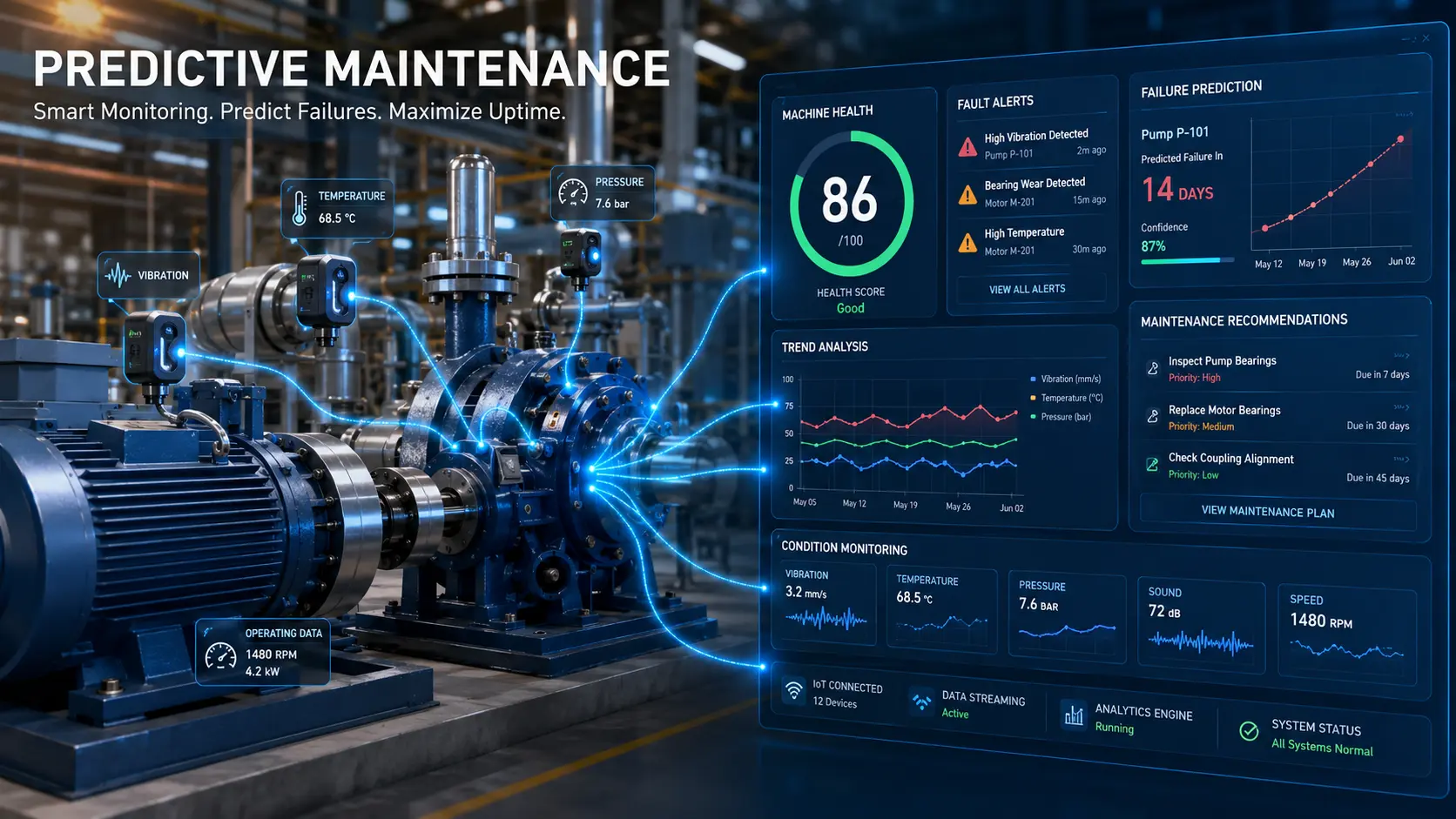
Common predictive maintenance technologies include:
- Vibration analysis for rotating machinery
- Temperature and thermal imaging
- Oil and lubricant analysis
- Ultrasonic testing and acoustic monitoring
- Pressure, flow, current, and power monitoring
- Internet of Things sensors and connected asset platforms
- Machine-learning models for anomaly and failure prediction
Advantages of predictive maintenance
- Maintenance is based on actual asset condition
- Developing faults can be detected earlier
- Unnecessary servicing and premature component replacement are reduced
- Maintenance can be planned before a failure disrupts production
- Equipment performance and remaining useful life become more visible
Limitations of predictive maintenance
Predictive maintenance requires suitable sensors, reliable data, trained personnel, analysis tools, and clear response procedures. It may not be economical for every asset, especially inexpensive equipment with limited operational impact.
Preventive maintenance vs predictive maintenance: key differences
| Factor | Preventive maintenance | Predictive maintenance |
|---|---|---|
| Maintenance trigger | Time, usage, or a planned schedule | Measured condition and predicted risk |
| Data requirement | Service history and manufacturer guidance | Sensor data, inspections, trends, and analytics |
| Initial cost | Usually lower | Usually higher because of monitoring technology |
| Maintenance precision | Moderate | High when data and models are reliable |
| Risk of over-maintenance | Higher | Lower |
| Technical skills | General maintenance planning and execution | Condition monitoring, diagnostics, and data interpretation |
| Best suited for | Assets with known service intervals | Critical assets with measurable failure indicators |
Which maintenance strategy is better?
Neither approach is automatically better for every organization. The right choice depends on asset criticality, failure consequences, monitoring feasibility, maintenance costs, and the quality of available data.
Choose preventive maintenance when:
- The asset has a predictable wear pattern
- Manufacturer service intervals are reliable
- The cost of condition monitoring would exceed the value gained
- Maintenance is required for safety, compliance, or warranty purposes
- The equipment is non-critical and inexpensive to repair or replace
Choose predictive maintenance when:
- An unexpected failure would cause major production or safety consequences
- The asset provides measurable indicators before failure
- Downtime and emergency repairs are expensive
- The organization can collect and act on reliable condition data
- Maintenance teams need better visibility into asset health
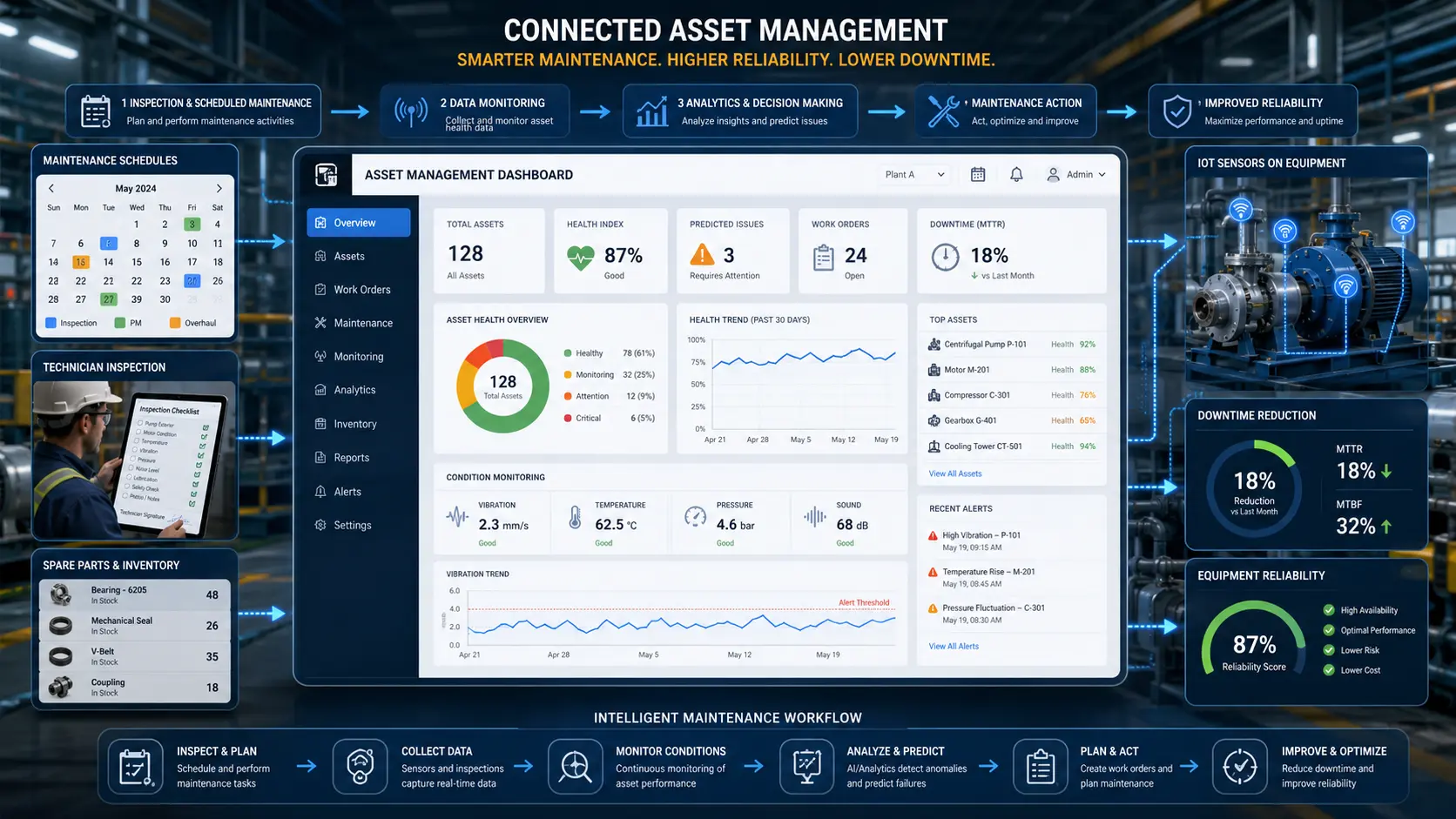
The strongest approach is often a hybrid strategy
Many organizations achieve better results by combining both methods. Statutory checks, lubrication, cleaning, and routine servicing may remain preventive, while critical motors, pumps, compressors, bearings, and production equipment are monitored predictively.
A practical hybrid maintenance programme can include:
- Asset criticality analysis: rank equipment according to safety, production, quality, and financial impact.
- Failure-mode review: identify how each asset can fail and whether the failure produces measurable warning signs.
- Maintenance selection: assign preventive, predictive, corrective, or run-to-failure tasks according to risk.
- Data collection: gather only the information required to make maintenance decisions.
- Performance review: track downtime, failure frequency, maintenance cost, and equipment reliability.
How AI is improving predictive maintenance
Artificial intelligence can analyse large volumes of operating data, identify patterns that are difficult to detect manually, and estimate the probability of failure. However, AI does not replace sound engineering judgement. Useful predictive systems still depend on suitable sensors, accurate maintenance records, relevant failure data, and clearly defined actions.
The most valuable implementation is not the one with the most sensors or complex algorithms. It is the one that gives maintenance teams enough reliable warning to make a better operational decision.
Final recommendation
Preventive maintenance provides structure and consistency. Predictive maintenance adds condition-based precision. Organizations should avoid treating them as competing ideas and instead select the most appropriate strategy for each asset.
Start with critical equipment, understand its failure modes, evaluate available data, and implement the simplest maintenance method that controls the risk effectively. As monitoring maturity improves, predictive maintenance can be expanded where it produces measurable value.
Frequently asked questions
What is the main difference between preventive and predictive maintenance?
Preventive maintenance is completed according to a planned interval, while predictive maintenance is triggered by asset-condition data and evidence of developing failure.
Is predictive maintenance more expensive?
It normally has a higher initial cost because sensors, software, data infrastructure, and technical skills may be required. It can reduce long-term costs when applied to critical equipment where downtime and failure are expensive.
Can a company use preventive and predictive maintenance together?
Yes. A hybrid strategy is common and often more practical. Routine tasks can remain preventive while high-value or critical equipment is monitored predictively.
Which equipment is suitable for predictive maintenance?
Rotating machinery, pumps, motors, compressors, bearings, turbines, production lines, and other critical assets with measurable warning indicators are common candidates.
Sources and further reading
Need a practical digital strategy?
We help organizations turn ideas, workflows, and growth goals into clear digital solutions.